
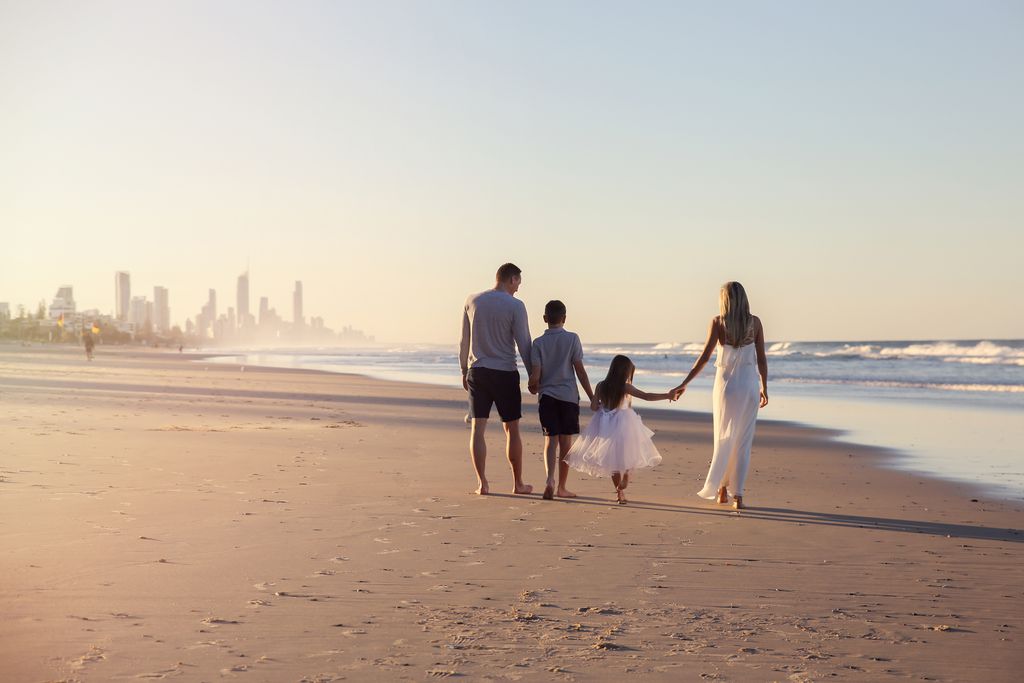
Australia’s rental crisis has taken an unexpected turn with the Gold Coast now outpacing Sydney in median rents and it may well be that short-term holiday lets, are to blame thanks to local planning regs that effectivelo allow properties designated as residential-only to be listed on the likes of Airbnb and Stayz without fear of .
New data from PropTrack and realestate.com.au shows national rents have climbed to a record $650 a week, up 4.8 per cent over the year — but behind that headline is a tale of diverging local markets with starkly different pressures.
On the Gold Coast, median weekly rent has surged to about $850, topping Sydney’s $760 — a remarkable outcome for a regional city and a sign of acute housing stress in Queensland that now rivals Australia’s largest capitals.
Structural pressure
The PropTrack Market Insight report, covered by Herald Sun real estate reporter David Bonaddio, shows landlords in some markets such as Queensland, Perth and Tasmania still command higher rents, while other areas see rising vacancy and softer rental conditions.
REA Group senior economist Anne Flaherty says strong population growth and limited housing supply are behind the broader national trends, with regional and coastal markets showing especially fierce competition for homes.
Similarly, realestate.com.au property news editor Sarah Dowling reports capital-wide rent rises unevenly distributed across cities, and that unit rents — traditionally the more affordable option — are now climbing faster than house rents as demand centres around inner-city and high-amenity locations.
Queensland’s rental surge
Queensland’s rental market is now among the tightest in the country. The Courier-Mail’s Sophie Foster writes that Queensland’s statewide median rent sits at about $670 a week, with rent growth in markets such as Cairns (up 8.7 per cent) and Townsville (10 per cent) underscoring a widespread squeeze.
But the Gold Coast stands out: its median rent — at $850 a week — now exceeds Sydney’s median and reflects pressure not just from population growth and supply shortfalls but also policy settings that allow residential properties to be freely used for short-term letting.
Short-term letting and council policy
Unlike emerging statewide or city cap schemes being proposed elsewhere, Gold Coast City Council does not currently impose a cap on the number of nights a home can be listed as short-term accommodation. Instead, properties used for short-term letting typically require planning approval (a material change of use) under the City Plan — a step many hosts skirt, according to council enforcement activity.
Council figures show more than 11,000 short-term accommodation (STRA) dwellings licensed on the Gold Coast, with the majority in high-density holiday precincts but some “leaching” into suburbs as owners chase tourism income.
Gold Coast City Council has ramped up enforcement against unregistered operators, issuing hundreds of show-cause notices in recent campaigns, but warns compliance remains a challenge due to the cost and complexity of the process.
In its 2024–25 budget, the council also raised rates on short-term accommodation properties to reflect the commercial benefits owners derive, a step Mayor Tom Tate says is intended to disincentivise purely holiday use and free up long-term rentals.
However, industry observers say the increased rates are easily passed on to guests and unlikely to prompt owners to exit short-term letting.
Statewide, Queensland’s short-term rental framework is under review, with recommendations emerging for a centralised registration system and code of conduct to help local governments monitor STRA activity. But a government-commissioned review has found the direct impact of short-term rentals on rents is limited compared with overall dwelling stock shortages, even in coastal hotspots.
What renters are feeling
For many renters on the Gold Coast, these policy nuances translate into real hardship. With vacancy rates among the tightest in the nation and new investor demand swelling, households are finding long-term supply increasingly scarce — even as thousands of homes rotate through platforms catering to tourists rather than permanent residents.
Data also shows unit rents rising faster nationally than house rents, further squeezing affordability in markets where apartments are often the most accessible rental option.
Economists caution there’s no silver bullet. Building more homes is vital, but how those homes are used — long-term or short-stay — also feeds into affordability dynamics.
Ms Flaherty says sustained population growth will keep pressure on rentals without meaningful supply increases, and while investor activity may eventually add stock, any relief is likely years away.
For Gold Coast renters — whether locals on modest incomes or long-term workers priced out of tighter inner-city markets — the combination of high tourism demand, planning settings that allow residential stock to serve holiday markets, and broader undersupply is proving an expensive mix.
Original reporting by David Bonaddio, Herald Sun, Sarah Dowling, realestate.com.au,Sophie Foster, The Courier-Mail. Collated from Leftfield Communications’ daily feed
› Forums › Current Page
Rents on Queensland’s Gold Coast have now outstripped even Sydney – and you can guess who is at least partly to blame.
[See the full post at: Gold Coast rents now the highest in Australia]
If you want to be alerted when anyone replies to your posts or responds to this topic, please register and login, then you will be able to subscribe to the topic. The opinions offered in these Forum posts and replies are not intended to be taken as legal advice. Readers with serious issues should consult experienced strata lawyers. NB: Longer threads may spill over to additional pages - look for the numbers on the bottom right, under the last post.
› Forums › Current Page
› Forums › Current Page