
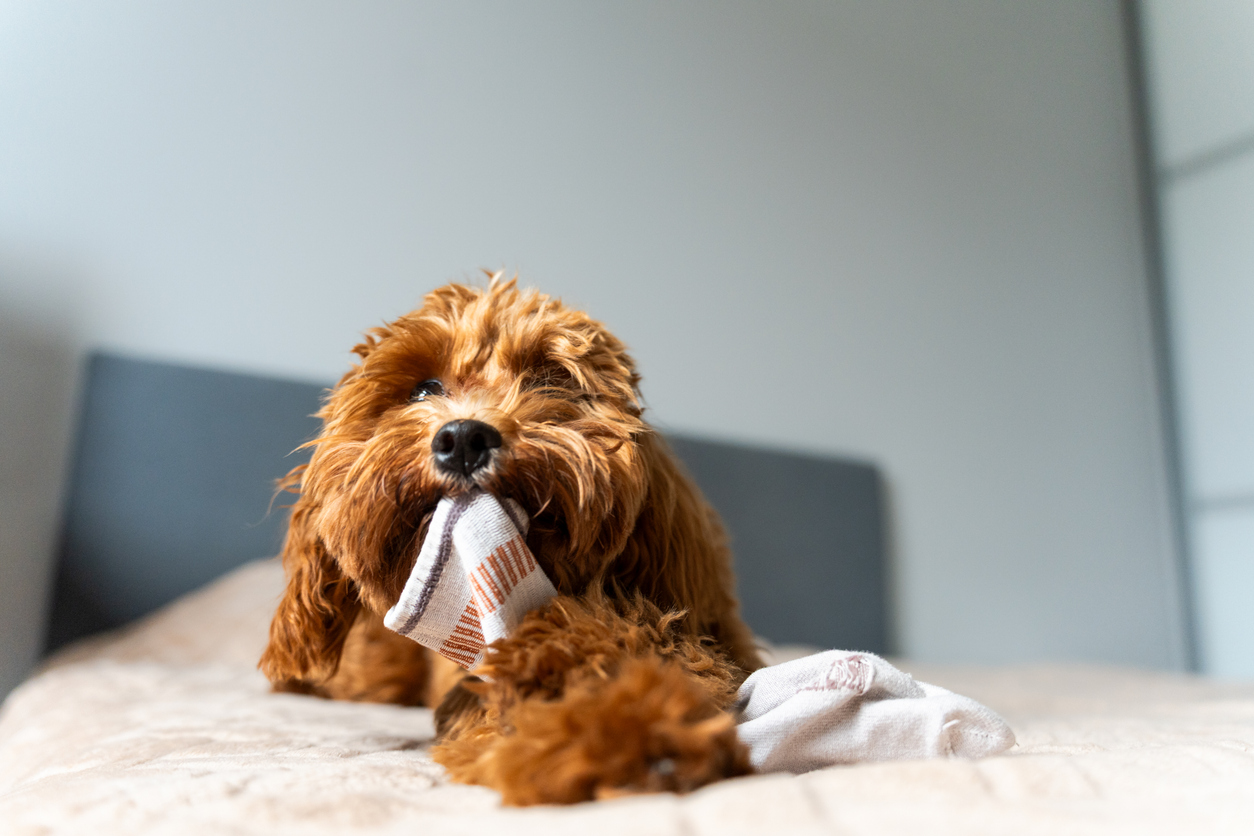
We are seeing a lot more pets around strata these days – which is great – but there’s a problem peculiar to apartments that has nothing to do with barking at the door or weeing on common property.
Apartments, notoriously, never have enough storage and that means stuff that might otherwise be put away tends to get left lying around. And that, according to the experts at Pet Insurance Australia, means temptation for pets and expensive vet bill when things that should be in a drawer or cupboard get swallowed. Here’s what PIA says about it:
Every puppy owner has experienced it. The missing sock. The chewed-up remote. The mysterious silence that usually means something is very, very wrong.
But while many puppy mishaps become funny family stories, some curious canine (and cat) adventures can result in serious, and expensive, trips to the emergency vet.
“Over the years, we’ve seen some whoppers of claims when it comes to foreign ingestion, particularly for dogs under the age of one, Nadia Crighton of Pet Insurance Australia says. “While in hindsight this can be amusing, the danger and cost can be shocking for many unsuspecting pet owners.”
Claims data from reveals the surprising household items that our canine companions are swallowing, chewing or getting into, with Pet Insurance Australia receiving over 1,700 claims per year for foreign body ingestion*.
“Some foreign body ingestion claims submitted by PIA Pet Insurance policyholders have exceeded $15,000 in the past 12 months, underscoring the potentially significant cost of emergency veterinary treatment.”
For Dogs, the most common culprits include:
- Corn Cobs
- Bones
- Skewers
- Socks & underwear
- Rocks
- Toy/Pillow stuffing
- Balls
- Damaged or incorrectly sized toys
- Food packaging
“I’ve personally seen cases of young dogs ingesting knives, and even entire blankets, stones, whole tennis balls, and various medications,” Nadia says. “Nothing is off limits to the curious mouth of a young dog.”
Why are puppies so curious?
According to animal behaviour experts, puppies explore their world much like human babies, through their senses, particularly their mouths.
“During the critical socialisation period between approximately three and 12 weeks of age, puppies are learning about their environment, developing social skills and becoming increasingly curious about the world around them,” Crighton says. “Their instinct to mouth, chew and investigate objects is a normal part of their development.”
Research shows chewing and mouthing are natural behaviours during puppyhood, helping dogs explore their surroundings, play, develop jaw strength and even learn important social boundaries with other dogs and humans.
Puppies begin losing their baby teeth at around three to four months of age, with adult teeth typically fully emerging by six to seven months. During this time, chewing often increases as puppies naturally seek ways to soothe sore gums and explore their environment.
“While owners often describe puppies as naughty or destructive, veterinary behaviour experts say the truth is much simpler, they’re learning about the world the only way they know how.”
Many owners underestimate just how creative a curious puppy can become.
“Puppies are naturally inquisitive. They investigate with their mouths, they chew, they pull things apart, and they can turn everyday household objects into fascinating toys.”
“Unfortunately, things like socks, underwear, toys, corn cobs, batteries, string and even children’s toys can become serious hazards if swallowed.”
“We often joke about the chaos of puppyhood, but some of these incidents require emergency surgery, hospitalisation and intensive veterinary care.”
The good news is that most accidents are preventable with supervision, puppy-proofing your home and ensuring puppies have plenty of appropriate toys and mental enrichment.
Puppy Safety Tips
- Keep socks, underwear and small objects off the floor
- Keep rubbish bins securely closed
- Never leave corn cobs, cooked bones or food scraps within reach
- Choose toys appropriate for your puppy’s size and chewing strength
- Supervise puppies during play, especially in their first year of life
- Provide regular enrichment and safe chewing alternatives
String’s the thing with cats
“Cats and kittens, although not as chew-curious as canines, also succumb to the emergency trip to the vet for ingestion issues,” Crighton warns. “With string/ribbon, dental floss, hair-ties, and damaged toys typically being represented in many cases.”
“We have seen costs for cats alone range from over $3,000 to an eye-watering $45,000-plus, with Burmese, Maine Coons, Birman and Domestic breeds topping the list,” she says. “What makes cats particularly vulnerable is their attraction to long, string-like objects. While they may look harmless during play, these items can cause serious internal injuries and often require urgent veterinary treatment.”
› Forums › Current Page
How a lack of storage space and a new puppy can be a dangerous combination – especially to your bank balance.
[See the full original blog post at: Footing the vet bill when another sock goes missing To comment on the post, click on reply here.]
If you want to be alerted when anyone replies to your posts or responds to this topic, please register and login, then you will be able to subscribe to the topic. The opinions offered in these Forum posts and replies are not intended to be taken as legal advice. Readers with serious issues should consult experienced strata lawyers. NB: Longer threads may spill over to additional pages - look for the numbers on the bottom right, under the last post.
› Forums › Current Page
› Forums › Current Page