
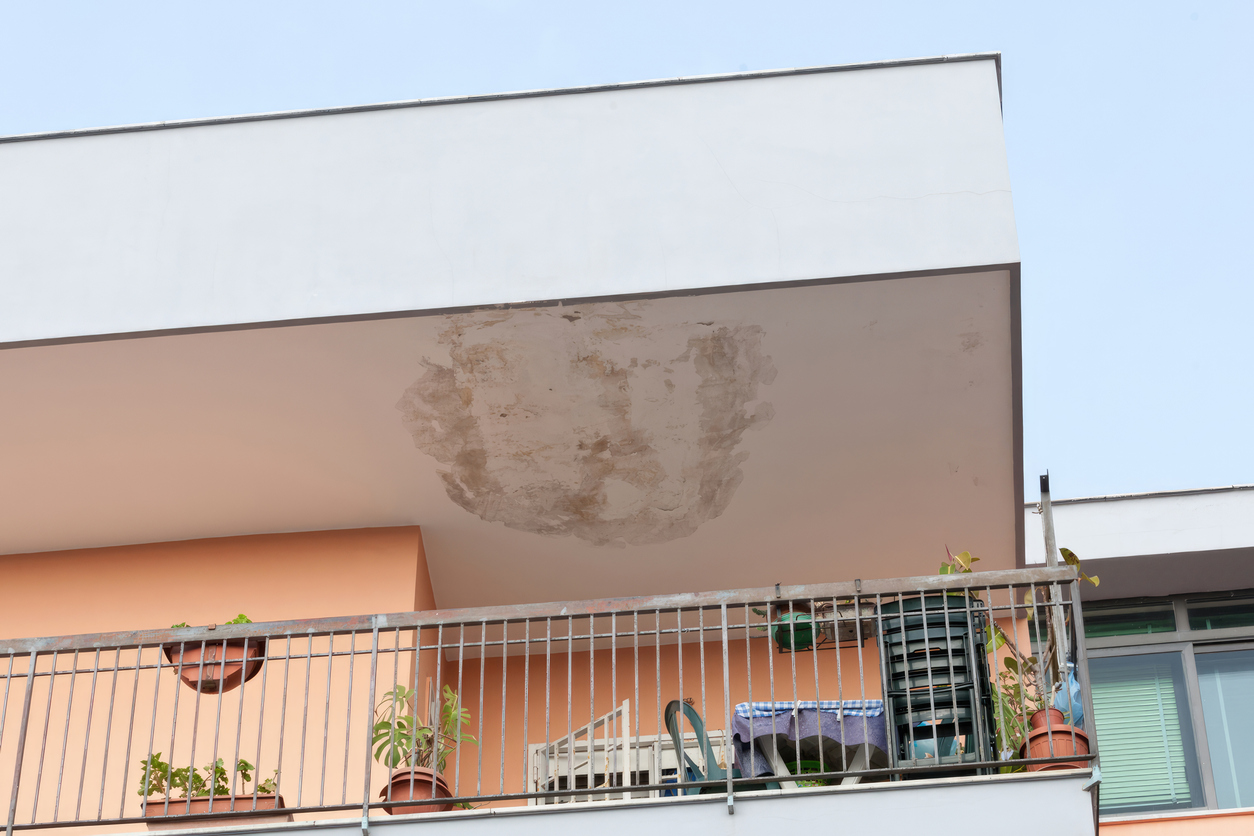
Waterproofing – and its failure – is one of the perennial problems in strata. Once water is no longer contained – whether it’s on a roof, in a bathroom or laundry or in a hidden pipe, it will travel wherever it wants and potentially cause a lot of damage along the way.
That damage can range from stained walls or ceilings to rotting timbers, like the apartment block in Victoria that was found to have been rotting from the inside, due to unaddressed defects, to the point that replacement non-flammable cladding couldn’t be anchored.
We once had a temporary leak during a renovation and the water travelled down from the 15th floor and didn’t stop until it hit the fifth. That’s why it’s important to detect the source of a leak as soon as you spot it.
The question is, what do you do then? The people at Sydney Waterproofing have provided this checklist of what to do and when.
Got a leak? What to do before the repair quote
A brown mark on the ceiling can start a surprisingly long conversation. The roof? The balcony upstairs? A pipe? Before long, everyone has a theory and someone is asking for a quote.
What helps at that point is a clear account of what actually happened. A few photographs and a short timeline give the person investigating the leak something more useful than “it’s been doing that for ages”.
Here’s where to start.
1. Deal with the immediate problem
Report an active leak promptly. Contact the building’s emergency contact or strata manager; if you rent, notify your property manager or landlord too. Don’t wait until you have assembled the perfect report.
Keep clear of water near electrical fittings and any sagging ceiling, and seek urgent professional help. Don’t enter a roof space or climb onto a roof to investigate. For storm-related emergency assistance in NSW, call 132 500; for a life-threatening emergency, call 000.
Once it is safe, record what you can see.
2. Photograph the room, then the damage
A close-up of a brown patch is useful. A second photograph showing where that patch sits in the room is often just as helpful.
Take a wider view, then a closer one. Note the room, the date and whether the area is actively dripping, visibly damp or showing an old stain. A short video can capture an intermittent drip.
Keep the original files. If the mark changes, take another photograph from the same position. Avoid repainting or covering the affected area before it has been recorded and assessed, unless urgent work is needed to make it safe.
3. Record the timing without guessing the cause
Write down when you first noticed the problem and what was happening around that time. Had it been raining? Had the shower or washing machine been used? Did the drip stop, continue or return later?
You don’t need a weather station or a spreadsheet. A note on your phone will do.
For example, a useful report might read:
“Tuesday, 7.30 pm: a damp patch appeared above the lounge window after afternoon rain. Wednesday morning: no visible dripping, but the patch was larger. Photos attached.”
That gives an inspector observations to investigate. “The balcony membrane has failed” is a conclusion that still needs evidence.
Don’t deliberately flood a balcony, run a hose over a suspect area or dismantle fittings to prove a theory. Leave testing to the appropriate professional.
4. Find out what has already been tried
Ask the strata manager for previous inspection reports, relevant repair invoices and any available photographs of earlier work.
“The balcony was fixed” leaves plenty unanswered. Which balcony? What work was done? When? Did the same leak return, and how soon?
Put the records in date order and say what is missing. If the previous work is only something a neighbour remembers, label it that way. It is a useful lead, but different from a written report.
5. Give the next person one clear brief
Send a short summary with the photographs and records. Include:
- The unit and affected room.
- When the problem started and whether it is continuing.
- Any pattern you have observed.
- Previous reports or repairs.
- Who can arrange access and when.
Ask who is coordinating the investigation and when you should expect the next update. Keep later developments in the same email thread so the history doesn’t disappear across several inboxes.
For NSW owners, the strata manager or committee is the starting point for suspected common-property repairs. Where responsibility is unclear, the strata plan and by-laws need checking. The location of a stain alone won’t settle who should pay.
Before agreeing to repairs, ask three questions
What evidence supports the proposed cause? What will the work address, and what is excluded? How will the result be checked afterwards?
If competing quotes propose different fixes, ask for those differences to be explained before choosing on price.
You don’t need to diagnose the leak yourself. Your most useful contribution is a reliable record: what happened, where, when, and what has already been done. That gives the next inspection a better starting point.
Sydney Waterproofing NSW provides residential, commercial and strata waterproofing services across Sydney. sydneywaterproofingnsw.com.au
› Forums › Current Page
You’ve noticed a brown stain on your apartment ceiling – what you do next could make the difference between a fix and a flood.
[See the full original blog post at: How not to freak when you discover a leak To comment on the post, click on reply here.]
If you want to be alerted when anyone replies to your posts or responds to this topic, please register and login, then you will be able to subscribe to the topic. The opinions offered in these Forum posts and replies are not intended to be taken as legal advice. Readers with serious issues should consult experienced strata lawyers. NB: Longer threads may spill over to additional pages - look for the numbers on the bottom right, under the last post.
› Forums › Current Page
› Forums › Current Page