
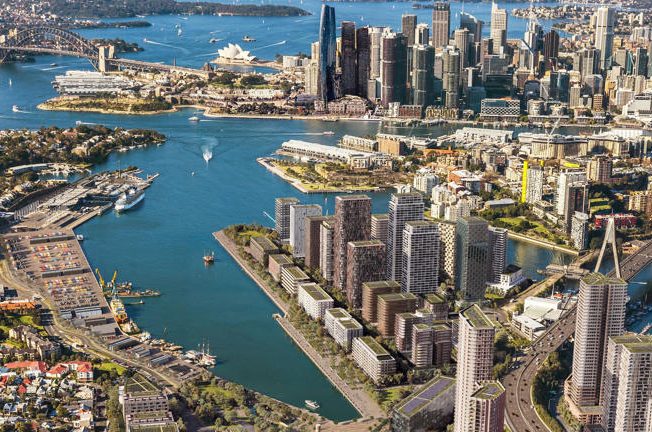
The Minns Labor Government this week announced what it calls a “city-shaping” transformation of Glebe Island and parts of White Bay into a new harbourfront suburb called Bays West – the first new inner-city suburb in Sydney in decades.
But community groups, local councils and industry representatives are forming an unlikely coalition of the unwilling as they preparte to fight the plan for a variety or reasons.
The precinct, built on underutilised government-owned port land roughly two kilometres west of the CBD, will deliver up to 8,500 homes directly above the new Bays West Metro Station, currently under construction as part of the Sydney Metro West project.
At least 10 per cent of those homes – a minimum of 700 – will be designated as affordable and essential worker housing for nurses, teachers, paramedics, firefighters and police.
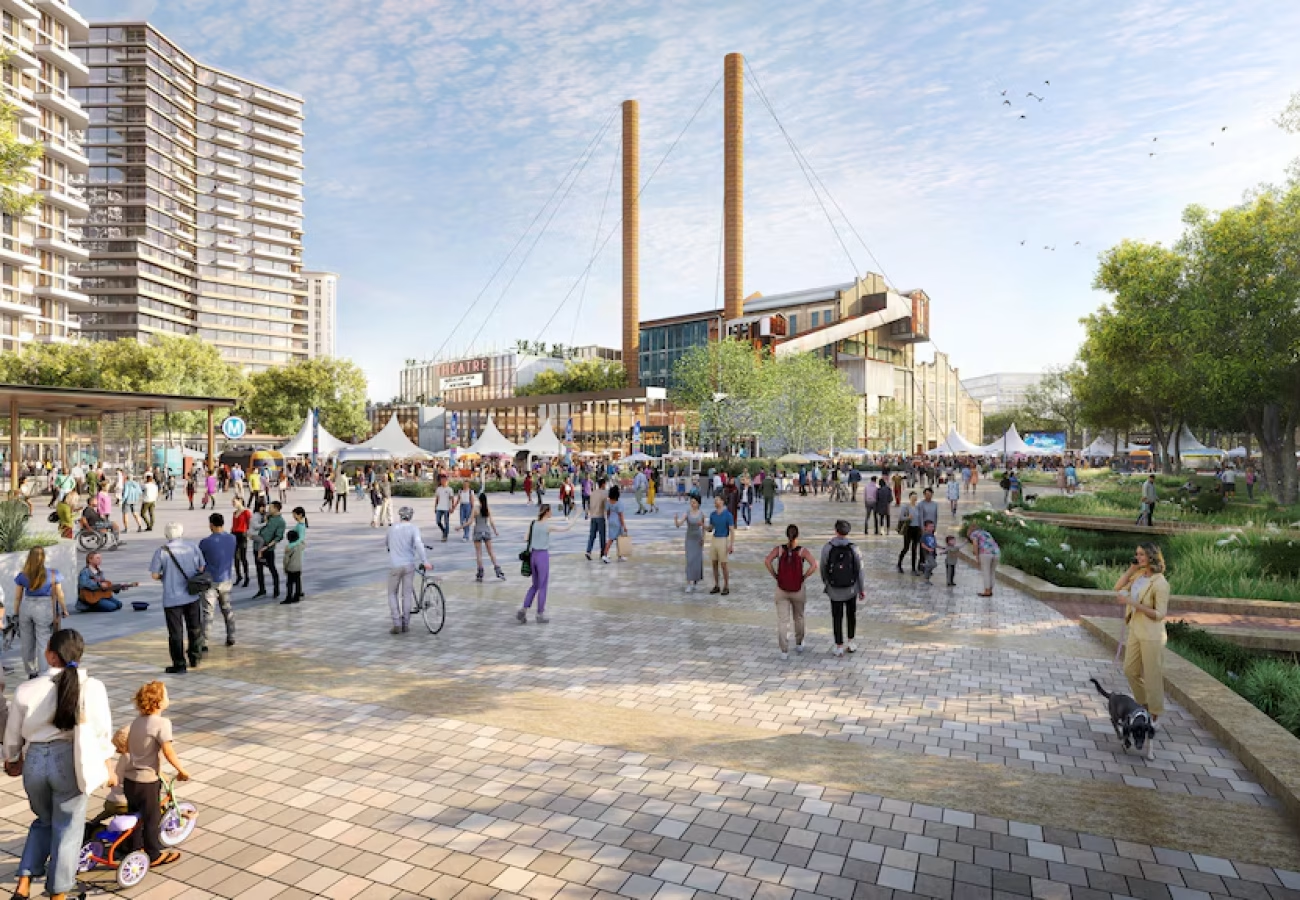
However, not everyone is happy – including existing residents who claim they’ve been duped and adjacent councils worried about traffic congestion and over-crowded transport.
In the Bay West plan, a quarter of the land will be reserved for open space, and public waterfront access to Glebe Island will be opened for the first time in more than a century. The historic White Bay Power Station will be converted into a cultural and community destination, and a new staging area in White Bay will host major events including New Year’s Eve fireworks and Vivid.
Premier Chris Minns framed the project as essential to Sydney’s future liveability. “If Sydney is going to remain a place young people and families can afford to live in, we have to use well-located land better and plan for the future,” he said, adding: “This is a better use for prime waterfront land than a concrete works.”
He also acknowledged that “not everyone will welcome change.” That turned out to be something of an understatement.
Residents and community groups push back
The Bays West precinct has been a lightning rod for community opposition for years, and this week’s announcement has not calmed the storm.
Residents in neighbouring Pyrmont, Balmain, Glebe and Rozelle have long expressed concerns about the cumulative impacts of development along the harbour foreshore. The City of Sydney has previously raised issues about potential amenity, noise and traffic impacts, and Pyrmont residents in particular have fought successive proposals to reintroduce industrial activity to the site. Jacksons Landing residents, who purchased apartments on the understanding that Glebe Island would transition to parkland and residential use, have described feeling betrayed by shifting government plans over the past two decades.
Community group Hands Off Glebe has surveyed local residents and found majority opposition (54 per cent) to any high-rise residential or commercial development on the foreshore. The group’s priorities include a five-storey height limit, no privatisation of public land, and at least 20 per cent each of affordable and public housing.
The Glebe Society and the Save Our Bays group have similarly called for low-rise development, better integration with existing communities, and genuine public access to the waterfront – concerns sharpened by what they see as the cautionary tale of Barangaroo. The Rozelle Residents Action Group has warned since the project’s earliest iterations in 2014 that the precinct risks being “Barangaroo’ed” – overdeveloped with minimal community consultation.
The affordable housing fight
The 10 per cent affordable housing commitment has drawn the most pointed criticism. Housing advocacy group Shelter NSW has previously warned that developments like Bays West “facilitate gentrification and result in the dislocation of lower-income workers,” and has called for a minimum 15 per cent affordable housing levy across all residential, commercial and retail floor areas.
The Greens have been more blunt, noting there is no mandated social or public housing in the plans and calling the development “a critical opportunity” being squandered while more than 10,000 people sit on the NSW social housing waiting list. In the Inner West Council, Greens and Independent councillors have previously pushed for 30 per cent social and affordable housing on the site, only to be voted down by Labor councillors who supported a 15 per cent levy instead.
Greens State MP Jenny Leong has accused the Minns Government of backflipping on its pre-election promise to ensure a minimum 30 per cent affordable, social and universal housing on surplus public land. “Minns’ plan includes a minuscule 10 per cent affordable and essential workers’ homes, with nothing slated for community or public housing,” the party said in a statement, warning that the new homes would be “multi-million-dollar apartments out of most workers’ reach.”
Advocates have also flagged the risk of “poor door” segregation, pointing to Barangaroo South where affordable housing tenants are reportedly required to use separate entrances and denied access to building amenities like pools and gyms.
Port operations out by 2030
To make way for the development, bulk port operations on Glebe Island – including cement, gypsum and sugar handling – will cease by no later than 2030. The iconic industrial silos visible from the Anzac Bridge, a fixture of the western harbour skyline since the 1970s, will be demolished. Planning Minister Paul Scully confirmed the silos’ value had diminished to little more than billboard space, and that repurposing them was not feasible.
The Government has committed $270 million to upgrade road connections around Port Kembla and investigate increased rail freight capacity – likely the long-discussed Maldon-Dombarton line – to absorb the displaced operations. Working harbour functions will be consolidated mostly into White Bay, and the White Bay Cruise Terminal, which receives more than 100 cruise ships annually, will remain.
An international design competition will guide the master plan, and a new dedicated delivery agency, reporting to Minister for Lands and Property Steve Kamper, will oversee the transformation. NSW Treasurer Daniel Mookhey emphasised that the land would remain in public hands.
Industry and the Opposition weigh in
The Working Port Coalition, a group of 24 businesses and industry associations including Svitzer, Cement Australia and Sugar Australia, has argued that losing Glebe Island as a port would drive up construction costs, increase traffic congestion and cause significant job losses. The coalition has estimated the potential economic impact at $50 billion annually, and the Department of Defence has emphasised the port’s continued importance for berthing naval vessels when primary facilities are at capacity.
The NSW Liberal and Nationals Opposition said it supports housing at Bays West in principle but raised concerns about the flow-on effects of shutting down one of Sydney’s busiest ports. Shadow Treasurer Scott Farlow questioned whether the project was “simply a revenue grab” to prop up the state budget, while Shadow Transport Minister Natalie Ward warned it risked “creating another millionaire’s row.”
What happens next
The project emerged as the Government’s “Plan B” after its $5 billion proposal to transform Rosehill Racecourse into a 25,000-home mini-city was voted down by Australian Turf Club members in May 2025. The Bays West master plan is expected to go on public exhibition for community consultation later this year, with bulk port operations winding down by 2030 and the Metro West station scheduled to open in 2032.
Whether Bays West becomes, as the Government hopes, a model for transit-oriented urban renewal – or, as critics fear, another harbourside enclave for the wealthy – will depend heavily on the detail that emerges from the master planning process. The design competition, the affordable housing targets, the building heights, the traffic management and the genuine integration with surrounding communities will all be tested in the months ahead.
For the residents of Pyrmont, Balmain, Glebe and Rozelle who have been watching this space – sometimes literally from their balconies – the announcement is just the latest chapter in a saga that has been running for more than a decade. As one Pyrmont resident told a community meeting years ago: “We had to fight to get rid of those [industrial operations], and now we’re going to fight again.”
› Forums › Current Page
Plans for a brand-new inner Sydney suburb promising thousands of homes have unlikely bed-fellows coming together in opposition.
[See the full post at: Coalition of the unwilling fights Glebe Island plan]
If you want to be alerted when anyone replies to your posts or responds to this topic, please register and login, then you will be able to subscribe to the topic. The opinions offered in these Forum posts and replies are not intended to be taken as legal advice. Readers with serious issues should consult experienced strata lawyers. NB: Longer threads may spill over to additional pages - look for the numbers on the bottom right, under the last post.
› Forums › Current Page
› Forums › Current Page