
I am getting the first inklings of a new … let’s call it an opportunity to make lots of money by dubious means that’s allegedly spreading through strata.
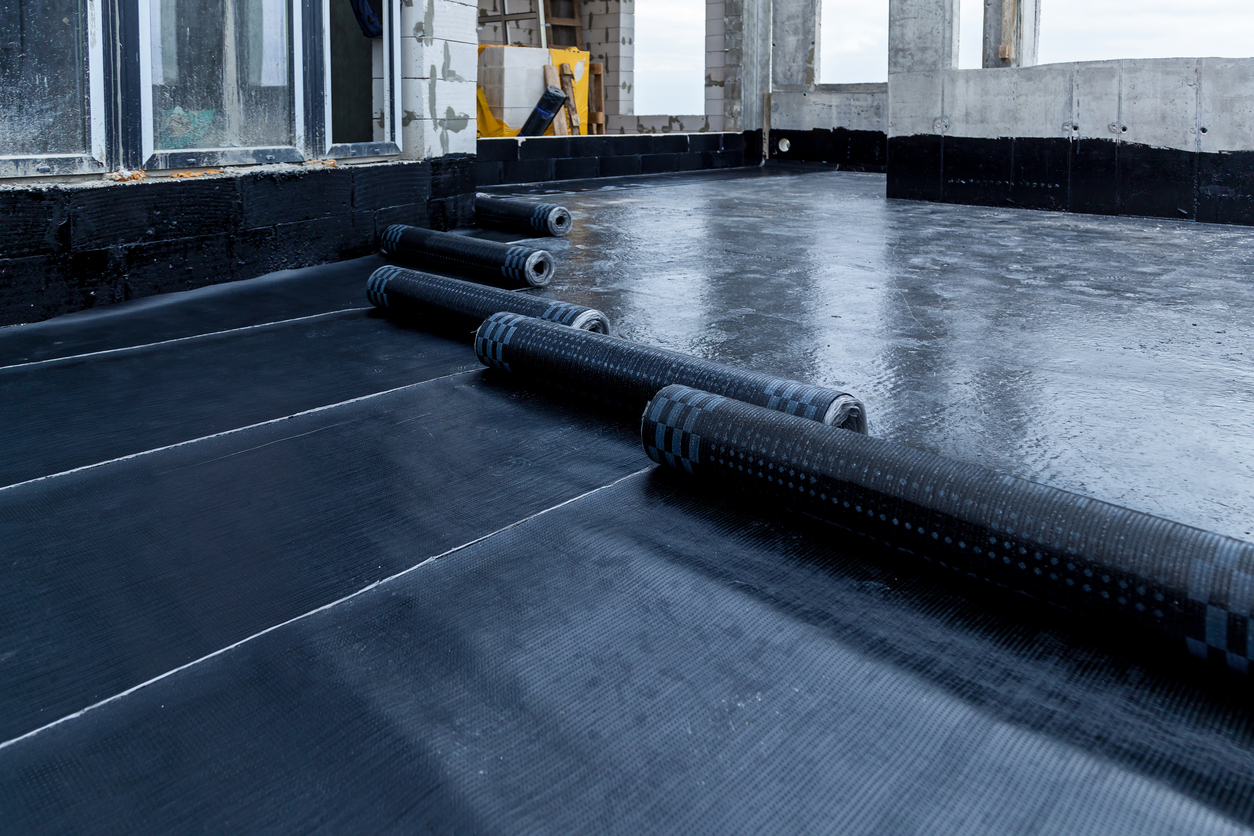
It relates to the waterproofing on ageing strata block roofs. Everything has a use-by date, from the cold cuts in your fridge to the friendships that have run out of social steam.
And waterproofing on the roof or any area open to the elements on a strata block is no exception. Of course, there’s a difference between a use-by date and a best-by limit.
And it seems some unscupulous waterproofing contractors may be taking advantage of over-anxious strata schemes to drain their bank accounts.
The most recent tale I’ve heard was from a friend whose tenant in their investment property had serious damp in the back of her wardrobe, which always got worse after heavy rain. It had caused mould and ruined a lot of her clothes.
A waterproofing expert came along, announced the waterproofing on the small but accessible common property roof had never been done properly. They said that all the tiles would have to be lifted, and the membrane re-laid and the the tiles replaced.
I think the quote was for about $25,000. Because the leaks only affected his apartment, my friend asked a plumber to trace it back from where the water emerged and, lo and behold, there was a hole in a downpipe where someone had dropped a cigarette. The lit ciggie had hit a bend, the pipe was dry at that time, so it just melted through.
After that, whenever it rained, the water from the drain leaked out into the wall behind her wardrobe. Suddenly what could have been a $25,000 job (which wouldn’t have worked anyway) was a $600 fix.
The plumber told my friend that waterproofing over-reach – either deliberate or accidental – is the latest money-making scheme in strata.
He said contactors turn up to buildings more than 20 years old that have sprung a few leaks, announce that the membrane must have reached the end of its functional life and start racking up the estimates for as big a job as they can justify.
Would any professional be so opportunistic and exploitative? All I can say is that waterproofing has all the requisite elements for flawed decision-making.
- Every strata owner knows that leaky concrete is bad, potentially very bad. It causes concrete cancer and no one wants that.
- No ordinary strata owner has the slightest idea of what waterproofing looks like, good or bad.
- The law says we have to maintain and repair our buildings. No ifs or buts.
Thus a less-than-honest contractor can, as the old saying goes, baffle owners with BS and blind them with science.
I know of one large building where their 20-year-old waterproofing has sprung a few leaks, mostly, it seems, caused by the roots of decorative shrubs.
A contractor has told owners that, because the waterproofing is near its end of life, they will probably need the entire area, the size of four tennis courts, to be stripped and re-waterproofed at a cost of several million dollars.
They may even have to dig up the floors of those apartments on the lower level that sit directly on the podium.
This will have to be done in in one contiguous membrane, owners have been told, because the Building Codes of Australia and Design and Building Practitioners Act (DBPA) don’t allow patching.
That, by the way, is utter nonsense. I asked the NSW Building Commission about this and they agreed that the following is true:
“Patching of isolated leaks in very large areas of waterproofing membrane, such as apartment block roofs and podiums, may be permitted under the DBPA and BCA, provided the patching work itself is undertaken by a registered and insured practitioner who guarantees their work.”
It seems that the various regulations do allow patching provided the patches don’t overlap or connect to other disrupted areas.
To be fair, there have been instances where efforts to patch leaky areas have resulted in the discovery that all of the membrane would need to be replaced. However, that is very different from an assumption that a membrane that’s more than 20 years old must require complete replacement.
Total replacement is being sold as a cautious approach when in fact it’s anything but. We can’t know for sure how the membrane on any specific building is behaving because this is a new issue for blocks built this century.
Will waterproofing that has lain undisturbed under, say, concrete tiles have aged as quickly as material more exposed to the elements?
Owners in blocks facing crippling special levies on the basis of a potentially flawed assumption need to pull hard on the handbrake as they hurtle towards a Rolls-Royce solution for what may turn out to be a Fiat Bambino problem.
This is a story that will run and run, as more apartment blocks built this century reach their waterproofing’s theoretical use-by dates and there’s no one there to tell owners what’s bona fide and what’s BS.
To be clear, we are not saying all or even any waterproofing jobs are a scam. But we do wonder about situations where the people who benefit most from the work are also those giving advice on what’s needed.
We’d be interested to hear from Flatchatters who’ve had experience in this area, good or bad. There’s already a response from one concerned owner on the Flat Chat Forum.
A version of this editorial comment first appeared on the Flat Chat newsletter.
› Forums › Current Page
Does a leak in your unit block roof mean your entire waterproofing needs to be replaced in one massive hit? Some contractors say it does.
[See the full post at: Is rooftop waterproofing the latest strata scam?]
If you want to be alerted when anyone replies to your posts or responds to this topic, please register and login, then you will be able to subscribe to the topic. The opinions offered in these Forum posts and replies are not intended to be taken as legal advice. Readers with serious issues should consult experienced strata lawyers. NB: Longer threads may spill over to additional pages - look for the numbers on the bottom right, under the last post.
› Forums › Current Page
› Forums › Current Page