
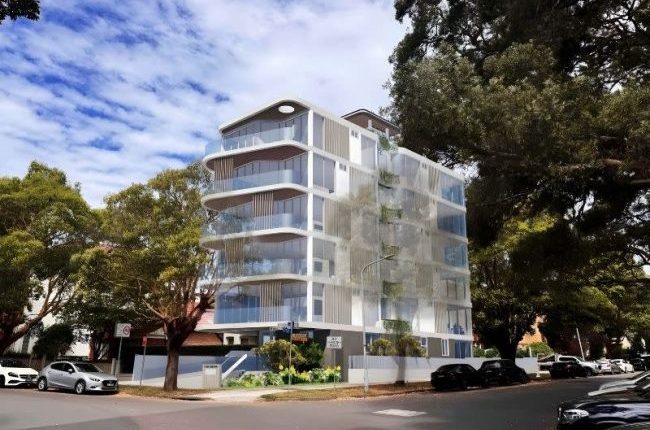
If the NSW Government ultimately decides to build over the long-mothballed Woollahra “ghost station”, it is unlikely to struggle to attract interested developers.
A surge of mid-rise apartment proposals already flowing into Sydney’s blue-ribbon eastern suburbs suggests developers are lining up to capitalise on new transport infrastructure and state-led planning reforms that replace freestanding houses with denser housing, writes Vanessa Croll for Urban Developer .
And it must be noted that unlike the ‘gentrivictions’ of turning affordable homes into fewer luxury pads, many of these proposals will use the space currently occupied by one or two houses to build blocks that can accommodate ten times as many residents.
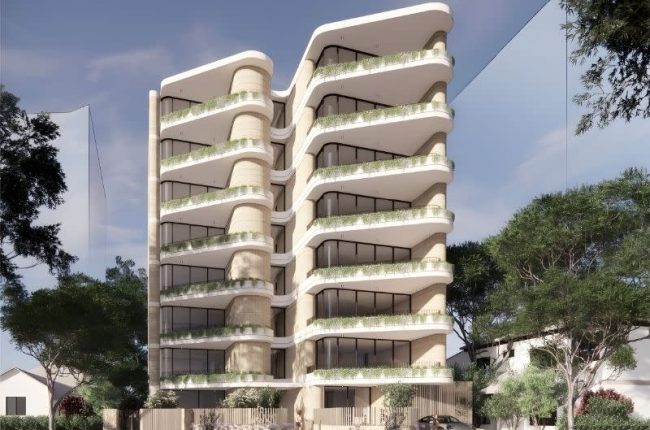
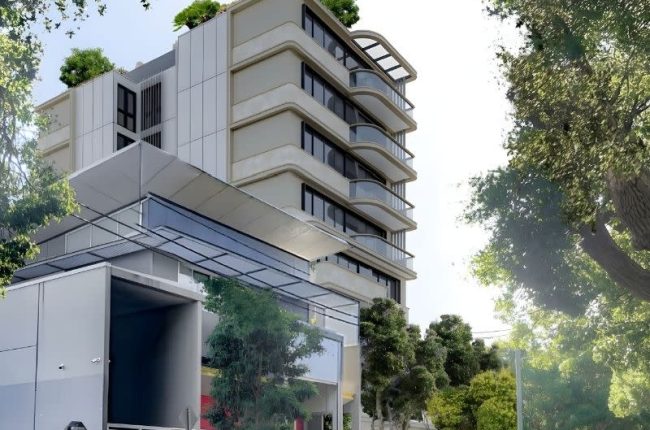
That said, while some of the blocks are stylish and elegant, others look like typical Nimbys’ nightmares – ugly, functional and true blots on the landscape (see picture carousel below).
 CSRB Holdings block at 13-15 Carlisle Street, Rose Bay


Last weekend’s launch of investigative engineering works at the dormant Woollahra station site — first proposed in the 1970s but blocked by local nimbyism — marks a symbolic return to a long-abandoned project and signals the Minns Government’s intent to rebalance housing supply away from the overcrowded inner-west and western suburbs toward established, well-serviced areas closer to the city.
According to a NSW Government announcement, the station would place Woollahra just eight minutes from the CBD on a rail corridor operating at only 43 per cent of peak capacity — space on trains the government says can support up to 10,000 new homes through rezonings around Woollahra and Edgecliff stations. Construction is expected to begin next year.
But the state’s Low and Mid-Rise (LMR) Housing reforms are already taking effect with a number of medium-rise apartment blocks slated to replace free-standing homes across the Eastern Suburbs.
Mid-rise momentum builds
In Woollahra Council alone, seven apartment development applications were lodged in December under the LMR framework, collectively delivering 86 apartments in buildings ranging from six to nine storeys. Each proposal replaces one or more detached houses, increasing net housing supply on relatively small sites.
The projects, reported by Urban Developer in January, span Rose Bay and Double Bay and include a mix of private developer-led schemes and owner-driven applications, signalling broad uptake of the new controls rather than reliance on major institutional players alone.
Among the proposals is Fyve Developments’ $31.4 million, six-storey project at 28–32 Dover Road, replacing three houses with 19 apartments, and CSRB Holdings’ eight-storey, 20-apartment scheme at 13–15 Carlisle Street, which includes five affordable homes and unlocks additional height and floor space under the LMR bonus provisions.
Further along Spencer Street, multiple sites are being consolidated or redeveloped into seven-storey apartment buildings, while Double Bay has seen nine-storey proposals incorporating affordable housing on Manning Road.
Taken together, the projects demonstrate how the LMR reforms are reshaping traditionally low-density suburbs by incrementally replacing detached housing stock with mid-rise apartments — a model the state government argues is critical to meeting housing targets without pushing all growth to Sydney’s fringes.
A test case for eastern suburbs density
The Woollahra station activation has sharpened attention on the eastern suburbs as a potential test case for transit-oriented development in areas long resistant to higher density.
The Minns Government has framed the rezoning around Woollahra and Edgecliff as comparable to state-led planning interventions at Burwood North and along Parramatta Road, with a two-year rezoning process expected to culminate in public exhibition in the second half of 2026.
“Every area of Sydney has to take their fair share of housing,” Acting Minister for Planning and Public Spaces Yasmin Catley says in the January 9 release, adding that the former Liberal-National government had failed to align housing delivery with transport investment.
While Woollahra Council has continued to oppose the LMR reforms, arguing they override local planning controls and strain infrastructure, the pace of development applications suggests market appetite is running ahead of local resistance.
Community objections have already been lodged against earlier Rose Bay projects, citing height, traffic and cumulative impacts, yet recent Land and Environment Court decisions — including approval of Orosi Developments’ Rose Bay scheme after a deemed refusal — have reinforced the strength of the state’s planning framework and affordable housing incentives.
Developers watching closely
Should the government proceed with development over or around the Woollahra station site itself, planning analysts say competition among developers is likely to be intense, given the suburb’s proximity to the CBD, spare rail capacity and the precedent set by recent approvals.
Crucially, the emerging pattern of development undermines claims that redevelopment in established suburbs merely reshuffles existing housing. Instead, the replacement of freestanding homes with medium-rise apartment buildings is delivering a clear net increase in dwellings — precisely the outcome the government says is required to address Sydney’s housing shortage.
With construction of the station flagged for 2027 and completion targeted for 2029, Woollahra’s long-dormant platform may yet become a focal point for one of the city’s most consequential density debates.
Original reporting by Vanessa Croll, The Urban Developer. Story accessed via LeftField Communications free daily property news feed.
› Forums › Current Page
Mid-rise developments slated for the Eastern Suburbs of Sydney are replacing single dwellings with heaps of new homes.
[See the full post at: The (medium) rise of blue-chip suburb blocks]
If you want to be alerted when anyone replies to your posts or responds to this topic, please register and login, then you will be able to subscribe to the topic. The opinions offered in these Forum posts and replies are not intended to be taken as legal advice. Readers with serious issues should consult experienced strata lawyers. NB: Longer threads may spill over to additional pages - look for the numbers on the bottom right, under the last post.
› Forums › Current Page
› Forums › Current Page