
Planning laws designed to increase housing supply are increasingly being used to demolish some of Sydney’s most affordable inner-city apartment blocks and replace them with fewer, high-end homes — fuelling concerns that “gentriviction” is accelerating across the city’s eastern suburbs.
Two high-profile redevelopment proposals in Potts Point and Paddington have crystallised the debate, with critics warning that incentives meant to boost density and affordability are instead displacing lower-income residents while delivering luxury apartments for fewer people.
In Potts Point, the NSW Department of Planning, Housing and Infrastructure last month approved a concept proposal from James Packer-backed Melbourne developer Time and Place to demolish the 1960s-era Chimes building on Macleay Street and replace it with a $91 million luxury apartment block.
The existing 10-storey building contains about 80 studio and one-bedroom units. Under the approved concept, it could be replaced with a tower of up to 13 storeys containing about 34 larger apartments, with at least 15 per cent offered as temporary affordable housing for a minimum of 15 years.
If you don’t fancy the mental arithmetic, applying the 15% affordable component would deliver just five apartments, a net loss of 75.
The decision, reported by The Sydney Morning Herald’s Megan Gorrey, was made despite more than 180 objections, including from the City of Sydney Council and independent MP Alex Greenwich, who argued the proposal would result in a net loss of lower-cost housing and displace long-term residents.
The department found demolition was justified on building safety and amenity grounds, concluding that adaptive reuse would require “demolition or major alteration and reconstruction” to meet current building standards. It also ruled the redevelopment was consistent with the future character of Potts Point and the government’s ambition to boost density in well-located areas.
Paddington backlash
A similar battle is unfolding in Paddington, where residents have mobilised against a proposed $78 million redevelopment on Oxford Street that would bulldoze a three-storey block of 27 studio apartments and several townhouses to make way for an eight-storey luxury apartment building.
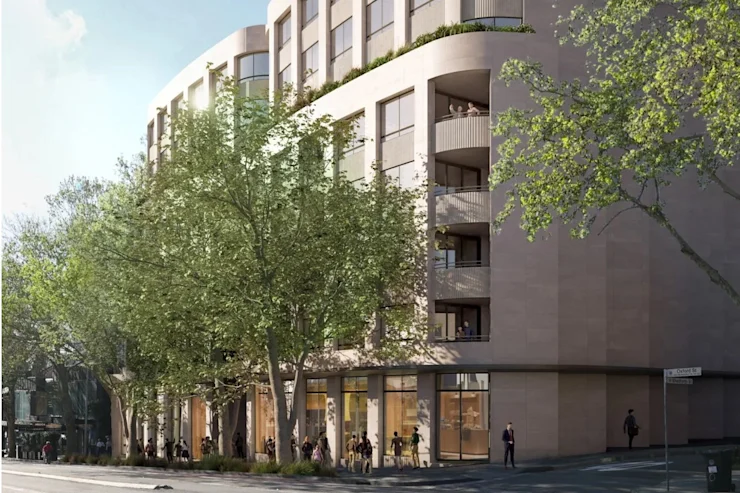
The Sydney-based developer, Toohey Miller, is seeking to leverage the Minns government’s affordable housing bonus scheme and low- and mid-rise reforms to deliver about 40 apartments, including around 10 affordable rental units offered at below-market rent for 15 years.
Local critics argue the project epitomises “gentriviction”: replacing genuinely affordable, higher-occupancy housing with fewer homes that will rent for significantly more once affordability controls expire.
“This proposal is replacing 27 genuinely affordable dwellings with luxury apartments and only [up to] 12 temporary discounted dwellings,” Woollahra independent councillor Harriet Price told SMH. She accused the developer of “double-dipping” into multiple planning incentives to achieve what she described as a “staggering uplift” in height and scale.
Policy intent versus outcome
Both developments have become flashpoints in a broader debate about whether Sydney’s planning reforms are delivering the outcomes promised by the state government.
Planning Minister Paul Scully has defended the policies, arguing that cities “are not museums” and that Sydney must evolve to address the housing shortage. He says the government’s infill affordable housing scheme has already approved more than 6300 homes, including more than 2100 affordable dwellings, creating a “rolling supply” of below-market housing.
But critics argue the minimum 15-year affordability period does little to offset the permanent loss of older, cheaper housing stock — particularly studios and small units that house singles, students and lower-income workers.
The Potts Point approval continues a trend of older apartment blocks in affluent suburbs being demolished and replaced with fewer, larger dwellings. The Paddington proposal, meanwhile, is among the first in a heritage conservation area to combine the affordable housing bonus with low- and mid-rise reforms, intensifying concerns about cumulative impacts.
The City of Sydney has already moved to limit net dwelling losses to 15 per cent under new rules introduced last year, while Woollahra Council is considering similar protections. However, such measures are not retrospective and do not apply to state-significant developments.
As pressure mounts to increase housing supply, residents and councils warn that without stronger safeguards, Sydney risks losing precisely the kinds of homes it most urgently needs — not just dwellings, but places ordinary people can still afford to live.
Original reporting by Megan Gorrey, Sydney Morning Herald. Story accessed via LeftField Communications free daily news feed.
› Forums › Current Page
Developers are using laws intended to tackle the housing shortage to build fewer, fancier apartments where affordable homes now stand.
[See the full post at: Luxury rebuild fears as ‘grentrivictions’ spread]
If you want to be alerted when anyone replies to your posts or responds to this topic, please register and login, then you will be able to subscribe to the topic. The opinions offered in these Forum posts and replies are not intended to be taken as legal advice. Readers with serious issues should consult experienced strata lawyers. NB: Longer threads may spill over to additional pages - look for the numbers on the bottom right, under the last post.
› Forums › Current Page
› Forums › Current Page