
Fatal inaction – call for e-bike strata regulations

iStock-2218675337-e1768959489746.jpg

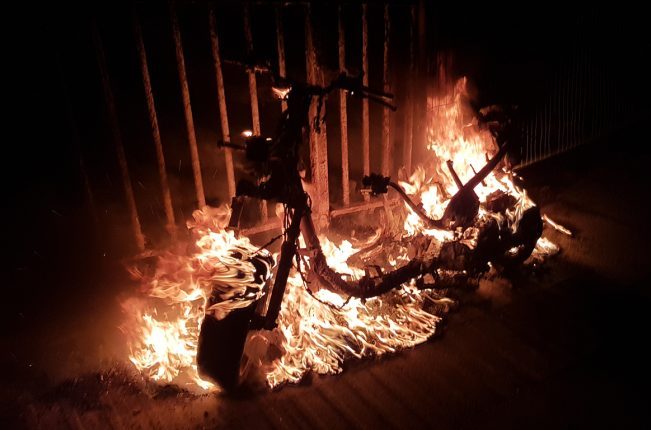
Lithium-ion battery fires are more ferocious and harder to extinguish than normal fires.

Apartment buildings across Australia are grappling with a question that literally could be one of life and death: how do you regulate something that is increasing in popularity, side-steps existing laws and could kill residents in your building?

While owners’ corporations and body corporates struggle to draft sensible and enforceable e-scooter and e-bike policies – or don’t even try because it’s too hard – lithium-ion battery fires are increasing at an alarming and accelerating rate across Australia.

Meanwhile e-scooter riders often blithely ignore the fact that their vehicles are illegal if they ride them in public (in some states) and many have little or no idea of the dangers they may pose to themselves or their neighbours, especially if they are damaged, mishandled or improperly charged.

And what has been described as a policy paralysis has gripped strata committees and strata managers alike, as they struggle to establish what they can do in terms of formulating enforceable by-laws that protect their communities.

Strata Community Association Queensland is now leading calls for urgent regulatory intervention, arguing that individual buildings cannot shoulder the burden of managing this crisis alone.

Queensland recorded at least six deaths from lithium-ion battery fires in 2025—compared with zero the previous year—yet many apartment buildings remain without clear rules about where these devices can be charged or stored.

According to SCA-QLD General Manager Laura Bos, the organization’s stance reflects growing alarm from strata managers who find themselves caught between legal uncertainty, enforcement challenges and genuine fear for resident safety.

“These are not abstract statistics. Behind every fire is a family, a building and a community left traumatised,” Ms Bos said. “The human cost, including young Queenslanders facing life-changing injuries and families grieving loved ones lost in preventable fires, reinforces the need for swift and coordinated responses.”

A National Crisis in Numbers

Queensland is far from the only state NSW experienced a staggering 95% increase in lithium-ion battery fires over just two years, from 165 incidents in 2022 to 272 in 2023 and 323 in 2024. Emergency services in NSW now respond to approximately 5.7 lithium-ion battery fires per week.

The human toll is mounting. NSW recorded its first two fatalities from lithium-ion battery fires in 2024, while Queensland’s six deaths in early 2025 suggest an alarming acceleration. By mid-February 2025, NSW alone had already confirmed at least 28 lithium-ion battery fires, with authorities responding to four separate incidents in a single 12-hour period in early February.

Internationally, the crisis appears even more severe. In the UK during 2024, fires involving e-bikes or e-scooters resulted in 8 fatalities and 86 non-fatal casualties across 211 incidents. New York City has emerged as a global hotspot, with e-bike-related fires in 2024 resulting in 6 deaths, 99 injuries, and 279 incidents.

Fire and Rescue NSW statistics indicate that people are four times more likely to be injured by a fire which originates from a lithium-ion battery compared to other fire types—a sobering statistic that underscores why SCA Queensland believes this issue demands immediate policy intervention.

Owners Corporations struggle

The challenge facing apartment buildings is multifaceted and unprecedented. Unlike traditional fire risks, which building codes and regulations have evolved to address over decades, e-scooter fires present a novel threat that existing frameworks were never designed to manage.

SCA Queensland reports that strata managers are hearing increasing concerns about unsafe charging practices, device modifications, and low-quality or second-hand e-scooters and e-bikes being stored and charged inside apartments and on common property. Yet translating these concerns into enforceable policies has proven extraordinarily difficult.

Owners’ corps face several interconnected obstacles. First, there’s the fundamental question of authority: do they have the legal power to regulate what residents do inside their private apartments? Can they prohibit charging devices overnight in bedrooms, or require residents to use only designated charging areas?

Second, enforcement presents a near-impossible challenge. How does a building manager verify that residents are using manufacturer-approved chargers? How can they identify modified batteries before they cause a fire? What recourse exists when residents simply ignore the rules?

Third, the liability question looms large. If a building implements policies but a fire occurs anyway, does that increase or decrease the body corporate’s legal exposure? What if the policies themselves are deemed inadequate or overly restrictive?

Ms Bos argues that these questions demonstrate why building-by-building responses are insufficient. “What we are seeing is a tragic and accelerating pattern that should alarm every Queenslander, particularly those living in strata communities,” she said. “Lithium-ion battery fires are fast, ferocious and often fatal. In apartment buildings they do not just endanger one household—they can place entire communities at risk.”

The Unique Vulnerability of Multi-Storey Buildings

SCA Queensland’s emphasis on strata environments isn’t merely organizational self-interest—it reflects genuine and distinctive risks that apartment buildings face.

The characteristics of lithium-ion battery fires make them particularly catastrophic in multi-storey residential settings. Authorities have warned that at-home modifications to lithium-ion batteries and related chargers had contributed to numerous fires, with investigators documenting cases where homemade charging systems caused batteries to overheat and explode.

Unlike conventional fires, thermal runaway events can reach temperatures exceeding 600 degrees Celsius within seconds. In apartment buildings with shared corridors, limited exit paths, and vertical air shafts that can spread smoke rapidly through multiple floors, a single e-scooter fire can trap dozens or even hundreds of residents.

The toxic gases produced pose an additional threat. One fire official noted that the gas released from lithium starting to undergo thermal runaway is extremely toxic and could kill occupants before flames even appear.

Recent incidents underscore these dangers. In July 2024, a lithium-ion battery from an e-bike exploded in a unit on the sixth floor of a 26-story building in Sydney, with seven people treated for smoke inhalation and 80-100 people evacuated. The building’s sprinkler system prevented a larger catastrophe, but the incident demonstrated how quickly a single-unit fire can endanger an entire building.

The Contributing Factors

SCA Queensland and fire authorities have identified several key drivers of the crisis that make policy development even more complex.

The proliferation of cheap, uncertified devices sold online represents perhaps the single largest challenge. Authorities believe low-quality e-bikes and e-scooters have contributed significantly to the rate of battery fires. Analysis by Allianz Insurance of 183 claims related to lithium-ion battery fires showed the majority involved e-bikes and e-scooters, caused by poor quality devices and poor charging practices.

The use of incompatible chargers compounds the problem. In March 2022, a Queensland man died from burns after a lithium-ion battery fire erupted in an e-scooter connected to an incompatible charger. The coroner ruled the death resulted from thermal runaway caused by the mismatched charger.

DIY modifications represent another significant risk. One fire official explained that when people modify scooters to increase power by arranging batteries differently, the batteries discharge faster than designed and cannot dissipate the resulting heat. A homemade power supply caused an e-bike battery to explode in Sydney’s Caringbah suburb when connected between a light fitting and the battery.

Consumer awareness remains shockingly low. The majority of e-bike owners (53%) and e-scooter owners (54%) are unaware their device is powered by a lithium-ion battery. This lack of awareness translates directly into dangerous behavior: nearly half of e-bike riders (49%) who charge at home are blocking their home’s fire exits.

What Some Buildings Are Attempting

While waiting for regulatory clarity, some forward-thinking apartment complexes have begun implementing their own solutions—though with varying degrees of success and legal certainty.

Measures being trialed include installing dedicated charging stations in well-ventilated common areas away from evacuation routes, implementing resident education campaigns about safe charging practices, drafting by-laws requiring devices to be charged only in designated areas, installing additional smoke detection in common areas where e-scooters are stored, and working with fire safety professionals to assess building-specific risks.

However, Ms. Bos emphasizes these ad-hoc solutions cannot substitute for comprehensive regulatory intervention. “Lithium-ion batteries behave very differently to traditional batteries. When they fail, fires can be sudden, intense and extremely difficult to escape from, especially in multi-storey residential buildings with shared corridors and limited exit paths.”

What SCA Queensland Is Demanding

The organization’s position has evolved from raising concerns to making specific, urgent demands of government and regulators.

SCA Queensland is calling for mandatory safety standards for all e-scooters and e-bikes sold in Australia—a position that aligns with regulatory action already underway in NSW. From February 1, 2025, all lithium-ion e-micromobility devices sold in NSW must comply with prescribed safety standards, with corporations facing fines up to $825,000 and individuals up to $82,500 for selling non-compliant products.

The organization also wants clear regulatory guidance for body corporates on what constitutes enforceable and legally defensible safety policies. Currently, strata managers operate in a grey zone where they risk either failing to protect residents or overstepping their legal authority.

Public education campaigns represent another key demand. “These deaths and life-altering injuries are not inevitable,” Ms. Bos said. “Many are preventable with better public education, safer products, the use of manufacturer-approved chargers only, and clearer guidance around where e-scooters and e-bikes should be charged and stored.”

Restrictions on the sale of uncertified batteries and chargers would address the root cause of many fires, while support for apartment buildings to install safe charging infrastructure would provide practical alternatives to bedroom and hallway charging.

A View from the Frontlines

The perspective SCA Queensland brings reflects not just policy analysis but frontline experience. Strata managers across Queensland are reporting near-daily conversations with worried residents, committee meetings dominated by safety concerns, and a growing sense that the regulatory response is lagging dangerously behind the scale of the threat.

“In strata environments, where one unsafe charging decision can place dozens or even hundreds of residents at risk, this issue goes beyond individual choice and becomes a shared safety concern,” Ms. Bos said.

The organization’s position reflects a fundamental argument: that apartment buildings should not bear sole responsibility for managing a product safety crisis that originates with manufacturers, importers, retailers and regulators.

SCA Queensland supports calls from fire authorities and affected families for stronger action, positioning itself alongside emergency services rather than in opposition. Fire and Rescue NSW has described lithium-ion batteries as the fastest-growing fire risk in the state—a characterization that SCA Queensland argues should trigger an emergency regulatory response.

The Path Forward

Ms. Bos acknowledges that perfect solutions remain elusive, but argues that imperfect action is preferable to continued paralysis. “We need urgent action from government, manufacturers, retailers and regulators. Body corporates shouldn’t be left to navigate this crisis alone, and residents shouldn’t have to wait for tragedy to strike their building before action is taken.”

The organization encourages continued scrutiny and welcomes discussion about practical solutions, but insists the time for purely consultative approaches has passed. With Queensland’s death toll already matching or exceeding entire previous years within just three weeks, SCA Queensland’s message is clear: apartment buildings are struggling to formulate effective e-scooter policies because they’re being asked to solve a problem that demands system-wide regulatory intervention.

Whether that message will translate into the swift regulatory action the organization is demanding remains to be seen. What’s certain is that with each passing week without meaningful policy response, more body corporates are left drafting rules they’re not sure they can enforce, to address risks they can barely quantify, for a crisis that shows no signs of slowing.

Newsletter

To subscribe (for free) to our weekly Flat Chat newsletter, bringing you links to our  latest posts, just click HERE.

Forums Current Page

  • Creator
    Topic
  • #82606 Reply | Quote
    Jimmy-T
    Keymaster

      Misused e-bike and e-scooter batteries pose a real danger in homes, but how can strata schemes regulate their use to safeguard residents?

      [See the full post at: Fatal inaction – call for e-bike strata regulations]

      If you want to be alerted when anyone replies to your posts or responds to this topic, please register and login, then you will be able to subscribe to the topic. The opinions offered in these Forum posts and replies are not intended to be taken as legal advice. Readers with serious issues should consult experienced strata lawyers. NB: Longer threads may spill over to additional pages - look for the numbers on the bottom right, under the last post.
    Viewing 15 replies - 1 through 15 (of 16 total)
    • Author
      Replies
    • #82614 Reply
      gmcevilly
      Flatchatter

        Thanks for this article. What happened to this initiative you reported in 2023?

        E-bike battery by-law and webinar on the way


        also here is some info from Fire + Rescue NSW, not that this solves the problems spelled out in your article
        https://www.fire.nsw.gov.au/page.php?id=9426

        #82615 Reply

        We completely disagree with the SCA and any organisation supporting effectively banning an appliance. An ebike.is a plugin appliance like any other household appliance and they are critical to sustainability.

        The anti owners stance while unsurprising from the SCA is truly puzzling from other organisations who should know better that governing appliances is clearly outside the powers of stratas around Australia and so it should be.

        The regulation of appliances is not the place of strata and is clearly under a consumer affairs or fair trading remit.

        We absolutely do not support this position which so clear overreach.

        #82618 Reply
        Jimmy-T
        Keymaster
        Chat-starter

          Thanks for this article. What happened to this initiative you reported in 2023?

          Good question.  OCN has become very corporatised these days.  So there will be lots of discussions about what could and should be done in strata, but as for action?  Your guess is as good as mine. They don’t communicate with us – unless they want us to promote one of their events – so we can only assume that they are forging ahead with whatever it is they are doing.

          One of the problems with the multiple strata conferences and seminars that seem to be everywhere these days is that they rarely every come up with any tangible results from their talking shops.  Discussing issues is good but for once I would like to see one of these bodies come out and say “we have discussed the issues and taken a vote and we demand the government does X, Y and Z.”

          Maybe they did – if so, they didn’t tell us or anyone else in the media.

          If you want to be alerted when anyone replies to your posts or responds to this topic, please register and login, then you will be able to subscribe to the topic. The opinions offered in these Forum posts and replies are not intended to be taken as legal advice. Readers with serious issues should consult experienced strata lawyers. NB: Longer threads may spill over to additional pages - look for the numbers on the bottom right, under the last post.
          #82622 Reply
          Jimmy-T
          Keymaster
          Chat-starter

            We completely disagree with the SCA and any organisation supporting effectively banning an appliance. An ebike.is a plugin appliance like any other household appliance and they are critical to sustainability.

            The SCA and other strata organisations are in a tricky position regarding e-vehicle.  We know that there are dangers from the misuse of batteries and we know that the owners corporations and bodies corporate have almost no power to regulate how you use the appliances in your home until they cause a problem outside your home (loud music and smoke drift being common examples).

            However, the owners as a group have the right to create by-laws that govern the use of common property.  And by the way, this is your neighbours and other owners, not some remote body of faceless men and women.

            So what, for instance, would prevent a super-majority of owners from passing a by-law that forbade residents from charging their e-vehicles from common power sources, parking them on common property or even moving them across common property?

            Apart from the general principal that a by-law can’t supersede superior laws (FYI, most laws are superior to strata law) Section 139 of the NSW Act says by-laws can’t be create or stand if they are “harsh, unconscionable or oppressive”.

            Now, the biggest by-law flip in recent years was when the Appeals Court of NSW decided that blanket  bans on all pets went too far because they didn’t allow for exceptions.  When the fur started to fly over all that, what was overlooked was that reasonable restrictions on pets were still allowed – e.g. if there was a valid reason for them.  The chair of the committee having  concerns about barking dogs was not a valid reason, for instance, because there were already ways of dealing with nuisance animals that didn’t require the banning of all animals.

            So would a ban on moving your e-scooter through or storing or charging it on common property be considered “harsh, unconscionable or oppressive” by anyone other than the scooter owner? Critically, would that be the view of a Tribunal.

            The building in which I live has a ban on anything other than a registered motor vehicle being parked in our parking spaces. That rule, intended to discourage people from leaving junk in their parking spaces, has meant I have been told not to park my road bike in the space under my storage box.  It certainly felt harsh to me but it wasn’t something over which I would go to the barricades.

            What would happen if an Owners Corp banned e-vehicles from being moved through common property, including passageways, lifts and lift lobbies? In the essentially adversarial system set up for strata, e-vehicle owners could  wait until they received a notice to comply then challenge it at a tribunal.

            No doubt the OC would hire lawyers to fight the case, as might the scooter owners and you never know, it could go all the way to the Appeals Court, as the pet issue did. You are looking at several hundreds of thousands of dollars spent by the time a resolution is reached.

            The only alternative is for one side or the other to give way – not because they think they are wrong, but because they can’t afford to prove they are right.

            And that’s what I think is motivating the SCA-QLD position.  They are saying to politicians, give us something that will protect communities and stand up in a tribunal.  They are not telling their members and their members’ clients to pass by-laws that might fail the three-pronged litmus test anyway and in fact seem to be trying to avoid that.

            The transport, storage and charging of e-vehicles is going to be the big battle in strata this year and the bad news for their owners is that there are considerably fewer e-bikes and e-scooters than there are dogs and cats in strata.

            But there is one spark of hope – thus far no insurer that we have heard of has told a strata scheme that it’s going to increase premiums if there are e-bikes and scooters in the building. Insurers have highly paid staff who assess the real risks to buildings in financial terms and if they don’t see a quantifiable risk, then anti-e-vehicle by-laws could be seen as harsh and oppressive.


            If you want to be alerted when anyone replies to your posts or responds to this topic, please register and login, then you will be able to subscribe to the topic. The opinions offered in these Forum posts and replies are not intended to be taken as legal advice. Readers with serious issues should consult experienced strata lawyers. NB: Longer threads may spill over to additional pages - look for the numbers on the bottom right, under the last post.
            #82621 Reply
            strataact
            Flatchatter

              Where does the line get drawn?  Is it only  lithium ion batteries, or all rechargeable batteries, irrespective of chemistry?

              And if it is all , are strata dwellers to be banned or restricted in recharging laptops,  mobile phones, cordless drills, ipads, torches and the myriad of other devices containing rechargeable batteries.

              #82625 Reply
              Jimmy-T
              Keymaster
              Chat-starter

                And if it is all , are strata dwellers to be banned or restricted in recharging laptops,  mobile phones, cordless drills, ipads, torches and the myriad of other devices containing rechargeable batteries.

                In the building next to ours, someone dropped an electric razor down the garbage chute, the battery broke and it started a serious fire. We are never going to get L-ion batteries out of homes but we could require apartments to have L-Ion fire-proof blankets or provide them as a safety measure.  They do exist and cost between $100 and $150.

                BTW, I reckon there are more fires caused by barbecues than e-scooters but try getting them out of apartment blocks.

                And did you write “myriad of” to annoy me?

                If you want to be alerted when anyone replies to your posts or responds to this topic, please register and login, then you will be able to subscribe to the topic. The opinions offered in these Forum posts and replies are not intended to be taken as legal advice. Readers with serious issues should consult experienced strata lawyers. NB: Longer threads may spill over to additional pages - look for the numbers on the bottom right, under the last post.
                #82629 Reply
                Jimmy-T
                Keymaster
                Chat-starter

                  No strata in Australia can create a rule or govern appliances which are plugged into their own unit. That’s not tricky. That’s just a fact.

                  That’s obvious but avoids addressing what by-laws can be passed. What is tricky is that the hysteria that you describe could push OC into making “all or nothing” decisions.

                  Here’s another fact for you – owners corporations can pass by-laws to govern the use of common property.  My building has a by-law that says you can’t charge your e-bike or e-scooter on common property (a such as your balcony). You have to do it inside your apartment.

                  There seems to be hysteria on both sides and the less calm and sensible discussion there is on these issues, the more likely it is that sooner or later a strata scheme will decide to not allow any kind of e-vehicles on any part of common property and that is when the real fight will begin.

                  The NSW fire department has told our OC that there is “no safe place” to charge e-vehicles in an apartment building. Our strata committee is clinging to that like it isthe word of God, partly because purely technically it’s true if they mean a battery fire can start anywhere and spread eventually.

                  The dumb thing is that we have a bicycle room that is effectively a solid concrete box where e-vehicles could be charged, their charging monitored and the risk of fire spreading seriously mitigated.

                  But no, the fire God says “nowhere” so we have a by-law that would probably fall over the first time it was challenged and which I’m pretty sure is ignored anyway because you can’t see what’s going on every balcony.

                  That’s what’s tricky – the gulf between the theory and the fears it fuels, and the realpolitik of strata.

                  If you want to be alerted when anyone replies to your posts or responds to this topic, please register and login, then you will be able to subscribe to the topic. The opinions offered in these Forum posts and replies are not intended to be taken as legal advice. Readers with serious issues should consult experienced strata lawyers. NB: Longer threads may spill over to additional pages - look for the numbers on the bottom right, under the last post.
                  #82631 Reply
                  Jimmy-T
                  Keymaster
                  Chat-starter

                    We have had lithium ion batteries for 30 odd years. Why are we trying to govern something which has no proven risk above generic noise level now?

                    You seem to be taking the POV that I am against you because I’m stating facts.  Here’s a fact – I own and use an e-scooter and I live in an apartment.

                    Regarding your point about how long we’ve had L-ion batteries, it’s only recently that we’ve had batteries big enough to propel humans at considerable speed and in the current numbers in our homes. It’s also only recently that people have died in fires caused by L-ion batteries.  Nobody as far as I know has been killed by an exploding Sony Walkman.

                    Conspiracy theories about who is behind this and why help no one.

                    Fact 1: L-ion batteries, when they are misused, damaged or mishandled, can cause fires.

                    Fact 2: The fires caused by Li-ion batteries are different because the chemical reaction releases oxygen which sustains and increases the ferocity of the fires, which often also involve explosions. Apartment block water sprinklers will make little or no difference – they can literally burn under water.

                    Fact 3: People have died in fires caused by L-ion batteries.

                    Fact 4: There are many more of these large batteries in our homes than there ever have been and there is no control over where they come from, how safe they are and how they are handled.

                    OPINION: If we can’t address and consider the facts, we should expect the other side of the argument to do so either.

                    By the way, I’d love to get a link to one of the many cases you referred to where people have been allowed to store things in their car space when their by-laws say they can’t.  I’ve never heard of this but I don’t know everything.

                    If you want to be alerted when anyone replies to your posts or responds to this topic, please register and login, then you will be able to subscribe to the topic. The opinions offered in these Forum posts and replies are not intended to be taken as legal advice. Readers with serious issues should consult experienced strata lawyers. NB: Longer threads may spill over to additional pages - look for the numbers on the bottom right, under the last post.
                    #82635 Reply
                    Jimmy-T
                    Keymaster
                    Chat-starter

                      They cant possibly call themselves independent advocates while continuing to take “sponsorships” from the same industry they claim they are advocating for owners on.

                      Well, we are as guilty as anyone of that here at Flat Chat.  What we try to do is separate criticism of the elements in the industry from biting the specific hands that feed us.  And we try to promote the positive aspects of their services too.

                      That said, there have been occasions where I have cancelled sponsorship from companies with whose philosophies I disagree. And there are some companies which, if their sponsorship was the only way Flat Chat could survive, I would shut the website down.

                      The ideal situation would be if OCN was fully funded by the government – but then would they soften their approach to government policies. We live in an age where people expect everything on the internet to be free of charge and you have to be pretty nimble to navigate those waters and stay afloat without outside financial assistance.

                      But at least we’re not as bad as the Brisbane Courier Mail which once refused a paid ad from a consumer group because their property developer advertisers wouldn’t like it.


                      If you want to be alerted when anyone replies to your posts or responds to this topic, please register and login, then you will be able to subscribe to the topic. The opinions offered in these Forum posts and replies are not intended to be taken as legal advice. Readers with serious issues should consult experienced strata lawyers. NB: Longer threads may spill over to additional pages - look for the numbers on the bottom right, under the last post.
                      #82637 Reply
                      Jimmy-T
                      Keymaster
                      Chat-starter

                        Strata needs to stay in its lane.

                        So do people offering false equivalences.

                        If you want to be alerted when anyone replies to your posts or responds to this topic, please register and login, then you will be able to subscribe to the topic. The opinions offered in these Forum posts and replies are not intended to be taken as legal advice. Readers with serious issues should consult experienced strata lawyers. NB: Longer threads may spill over to additional pages - look for the numbers on the bottom right, under the last post.
                        #82643 Reply
                        Jimmy-T
                        Keymaster
                        Chat-starter

                          Simply claiming that a 100% valid argument is a false equivalence because it doesn’t suit is not a particularly good argument.

                          Yes, but they weren’t “100% valid”. Comparing car fuel which does not spontaneously combust with L-ion batteries which can, is a false equivalence. Comparing fires that can be doused by water and foam with fires that can’t, is a false equivalence.

                          My point is that you are right – owners corporations can’t dictate what you plug into your electrical sockets. But they might be able to control what you do on common property, and if you can’t take your scooter across common property then you won’t be able to plug it in at home.

                          This is the time for calm consideration, not US Versus THEM battles. Failure to find a compromise is more likely to lead to a total ban rather than a free-for-all.

                          If you want to be alerted when anyone replies to your posts or responds to this topic, please register and login, then you will be able to subscribe to the topic. The opinions offered in these Forum posts and replies are not intended to be taken as legal advice. Readers with serious issues should consult experienced strata lawyers. NB: Longer threads may spill over to additional pages - look for the numbers on the bottom right, under the last post.
                          #82647 Reply
                          Jimmy-T
                          Keymaster
                          Chat-starter

                            That is literally not the scope or job of a strata. Way beyond a strata remit and purpose.

                            Fire safety is one of the principal responsibilities of strata schemes’ owners. That’s why they can demand entry to your flat to check your smoke alarm and insist that you upgrade it when necessary. It’s not the same thing but neither is it “way beyond”.

                            If you want to be alerted when anyone replies to your posts or responds to this topic, please register and login, then you will be able to subscribe to the topic. The opinions offered in these Forum posts and replies are not intended to be taken as legal advice. Readers with serious issues should consult experienced strata lawyers. NB: Longer threads may spill over to additional pages - look for the numbers on the bottom right, under the last post.
                            #82658 Reply
                            Jimmy-T
                            Keymaster
                            Chat-starter

                              I’m sorry but you are completely missing the point of the original article. It said: “Strata Community Association Queensland is now leading calls for urgent regulatory intervention, arguing that individual buildings cannot shoulder the burden of managing this crisis alone.”

                              You said, in many different ways, that this is something that can only be handled by Fair Trading or other government bodies, and not by strata schemes. It’s pretty much the same thing – except maybe you think there is no need for government intervention.

                              And my opinion is that I believe enough people in strata are concerned about this for them to start making bad decisions about what to do about e-vehicles. The facts about L-ion batteries are almost irrelevant – the perception is everything, especially when it comes to a vote at a strata general meeting.

                              And sure, maybe OCs will pass by-laws that can be challenged at the tribunal and in court – but why go to all that hassle if it can be avoided?

                              I actually think the risk is exaggerated and such risk as there is can be mitigated. But that isn’t going to happen  by cherry-picking facts and nit-picking debates.

                              For instance, I think I made it pretty clear that I was talking about damaged batteries spontaneously exploding. I never said, as you imply, that any battery has the potential to do so.

                              Owners corporations can control what people do on common property, including activities that are legal elsewhere, such as smoking, using bad language and dressing inappropriately (to name but a few).

                              Oh, and by the way, comparing trains in Victoria with strata in NSW is the epitome of false equivalence.  Actually comparing strata in Victoria with strata in NSW is a stretch too.  The reason nobody is even considering this in Victoria (if that is the case) is that there is no forum there for them to do so.  The media in Victoria is so wilfully blind to strata issues that they are almost culpable in the appalling state of affairs there.

                              So, we get it. You are pro e-vehicles. So am I.  But I don’t think “nothing to see here” is going to convince anyone. Consider this, more people have died in L-ion battery fires that have even been injured in flammable cladding blazes in Australia – and look what that did to apartments over the past few years.

                              If you want to be alerted when anyone replies to your posts or responds to this topic, please register and login, then you will be able to subscribe to the topic. The opinions offered in these Forum posts and replies are not intended to be taken as legal advice. Readers with serious issues should consult experienced strata lawyers. NB: Longer threads may spill over to additional pages - look for the numbers on the bottom right, under the last post.
                              #82646 Reply

                              Simply claiming that a 100% valid argument is a false equivalence because it doesn’t suit is not a particularly good argument.

                              Yes, but they weren’t “100% valid”. Comparing car fuel which does not spontaneously combust with L-ion batteries which can, is a false equivalence. Comparing fires that can be doused by water and foam with fires that can’t, is a false equivalence.

                              My point is that you are right – owners corporations can’t dictate what you plug into your electrical sockets. But they might be able to control what you do on common property, and if you can’t take your scooter across common property then you won’t be able to plug it in at home.

                              This is the time for calm consideration, not US Versus THEM battles. Failure to find a compromise is more likely to lead to a total ban rather than a free-for-all.

                              Lithium Ion batteries do not spontaneously combust. That is 100% factually incorrect.

                              #82661 Reply
                              Jimmy-T
                              Keymaster
                              Chat-starter

                                Lithium Ion batteries do not spontaneously combust. That is 100% factually incorrect.

                                Congratulations. You picked up that on that one occasion I did not specify damaged or incorrectly handle batteries, but I did say “can” so pfffft!

                                Anyway, I am not going to approve another of your posts until someone else has commented as this has gone on too long with just two voices.

                                If you want to be alerted when anyone replies to your posts or responds to this topic, please register and login, then you will be able to subscribe to the topic. The opinions offered in these Forum posts and replies are not intended to be taken as legal advice. Readers with serious issues should consult experienced strata lawyers. NB: Longer threads may spill over to additional pages - look for the numbers on the bottom right, under the last post.
                              Viewing 15 replies - 1 through 15 (of 16 total)
                              Reply To: Fatal inaction – call for e-bike strata regulations
                              PLEASE ... If your property is not in NSW, mention its location (state). Don't identify companies or individuals by name. Don't mention or promote your company or services. Keep acronyms and initials to a minimum. Please, don’t use “quote” unless there is a specific point to which you wish to refer, then highlight (define) that specific passage before you click on "quote". Otherwise just use reply. THANKS.

                              You can use BBCodes to format your content.
                              Your account can't use all available BBCodes, they will be stripped before saving.

                              Your information:


                              Forums Current Page

                              Forums Current Page

                              scroll to top