
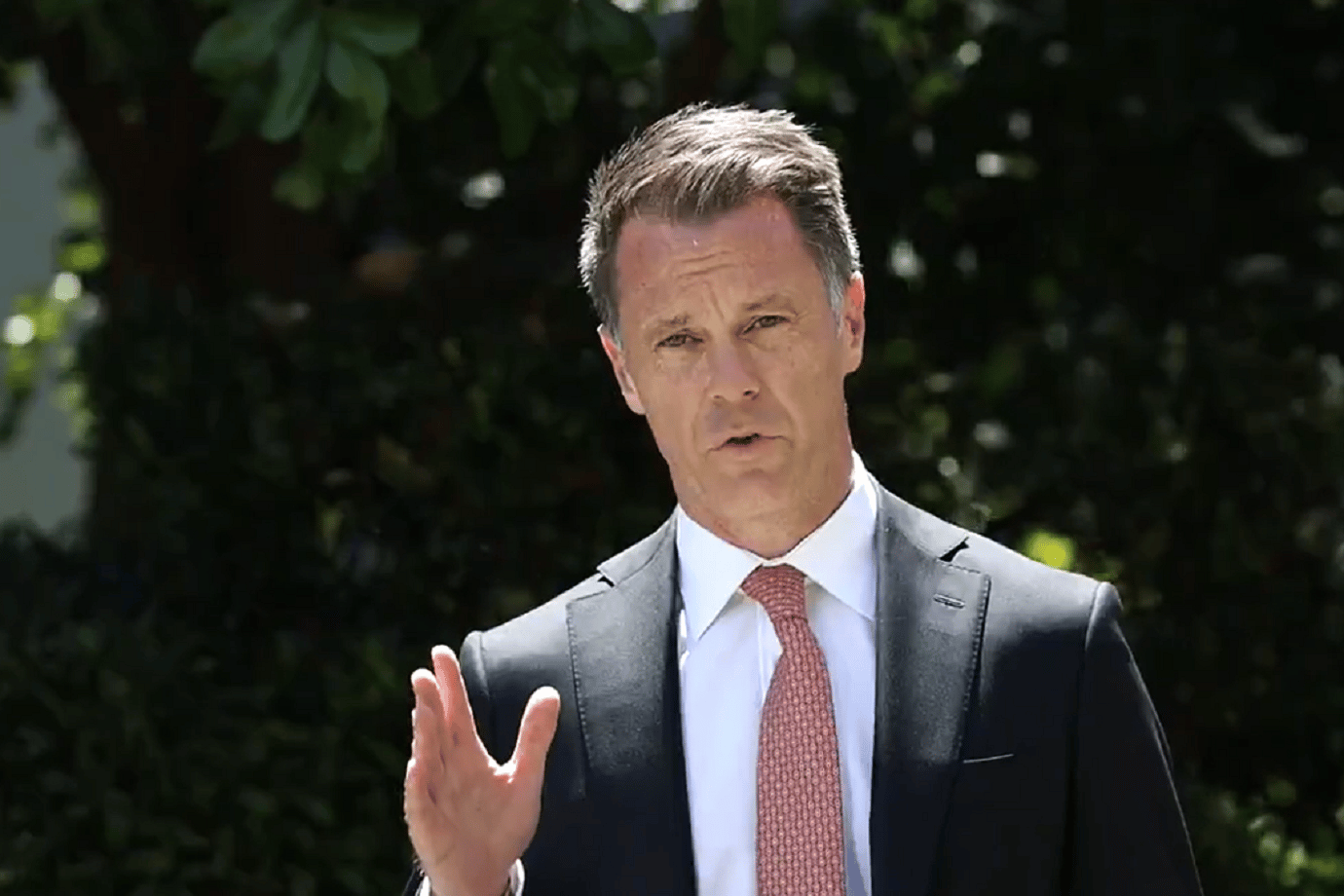
NSW Premier Chris Minns has taken a potshot at ‘entitled’ homeowners in some of Sydney’s more salubrious suburbs, accusing the Nimbys of having exacerbated the city’s housing problems while blocking efforts to remedy it amid a growing “culture of no”.
In a speech at the Liberal think tank Centre for Independent Studies’ housing policy forum this week the Premier claimed Sydney was the second-most expensive city in the world for housing, after Hong Kong, yet NSW was being outperformed by other states in terms of building new homes.
He added that, ironically, Sydney was the 800th least densely populated city in the world.
“I think those two things are related to one another” he said. “For the last thirty years, we’ve been consistently outbuilt by Victorian and Queensland … we build six homes per 1,000 residents every 12 months. In Victoria, they produce eight houses per 1,000 people and in Queensland, it’s nine houses per 1,000 people every 12 months.
“So even though we’ve got the highest land prices, the highest increases in land prices, the highest rents, the highest increases in rents, the lowest supply, the worst pressure on young people, we’re also building the fewest amount of houses.”
He cited the effective campaign in Woollhara, in the 1970s, to block the opening of the new station built on the Eastern Suburbs rail line as an example on Nimbyism at its worst.
“That’s why over the weekend, we made what we thought was an overdue decision, to finish Woollahra Station, so we can build ten thousand new homes within five kilometres of the CBD.
“It’s both a slice of Sydney’s history but also an insight into some of the more myopic tendencies that we’ve seen in the state.
“Basic construction was done and the platform was in fact completed but after a sustained, and it has to be said, successful NIMBY campaign that went all the way to the High Court, the station was scrapped. I think that was the wrong decision.
“In an attempt to protect Woollahra from change, you’d have to say it was incredibly successful. In the last 50 years, Greater Sydney has grown by 74 percent, but Woollahra’s population has declined by 10 percent.
“So there are less people living in Woollahra today, than there were in 1970. Which is a window into culture we’re trying to stop or change in NSW. It’s culture of no.”
Welcoming, New Zealand Minister for Housing, Transport and Infrastructure Chris Bishop, Premier Minns said that when Labor came to government in New South Wales and they were developing their housing policy they took direct inspiration from the experiences in New Zealand, particularly in Auckland, and took three main lessons from it.
Firstly, when they made it easier to build new infill housing in Auckland, supply increased, with construction levels doubling in those areas.
That put downward pressure on prices, particularly rental prices, which were up to 35% cheaper than they otherwise would have been, had it not been for the zoning and planning changes.
Finally, by putting downward pressure on prices, younger people started to come back into the city and brought “a bit of vibrancy into the city”.
“In neighbourhoods where there little to no upzoning, you saw the weakest growth in people aged 20 to 35.,” he said. “And vice versa … in the areas with strongest upzoning, you saw the biggest growth in that younger demographic. And that’s exactly what we need to power a city, a vibrant city, an exciting city.”
The Premier said Sydney was facing far worse problems when it came to housing inequality, and particularly housing inequality between the generations.
“As a result, we’re losing young people every year, twice as many – twice as many – as we’re getting back.” he added. “Last year, it was 40,000 young people packing their bags in the prime of their working life.’
He said in the past interstate migration had generally been older Australians moving to Queensland for warmer weather, but now it was “people that we want to be doctors and nurses and police officers. People that we want to start their own businesses, to become entrepreneurs.”
He continued that NSW had accepted a culture where it was always easier to find an excuse to say no, rather than a reason to say yes.
“We had a situation where certain local councils, especially I have to say, some of the wealthier councils, had used their planning powers to make it almost impossible to build houses in those places.
“Consider one example, but one of many, a few weeks ago, there was an article in the Sydney Morning Herald, where they interviewed a group of concerned residents in the suburb of Castlecrag.
“These residents were opposed to an apartment block, proposed above some old shops, and it was 11 stories high, but it was eight kilometres from Sydney’s CBD.
“But then you do some further reading, and you find out that in the last 35 years, Castlecrag has built 33 homes.”
He also referred to a story where a woman was asked if she wasn’t seeming “entitled” when she objected to new developments. “Well, we are entitled,” she replied.
“I thought that probably summed it up,” the premier said, adding that Nimby culture had effectively blocked new housing, pushed up prices and forced a generation of people to question whether they’ve got a future in the city of their parents and grandparents.
“When you make a big change you can expect opposition,” he said. “Sometimes from the occasional Liberal politician who wants to build a wall around the North Shore. Or from Green MPs who say we need a million new houses but nowhere near any of their electorates. Or maybe one or two Labor mayors around the joint who say the same thing.
“But the truth of the matter is, we have to do something about the housing situation. It’s an urgent priority for the state.”
He added that that the Housing Development Authority had approved 70,000 homes in just seven months, because they had the ability to do not just the zoning change, but also the development application change.
The proposal to complete and finally open Woollhara station, allied to the proposals intended to make it easier to develop medium and highrise blocks near major transport hubs, is slated to add 10,000 homes around the suburb and nearby Edgecliffe.
However, “we’ve got to resist the assumption that NIMBYism is dead and buried, or that it isn’t lying dormant,’ he warned, “because it is ready to lurch up once again.”
› Forums › Current Page
In a major speech, NSW Premier Chris Minns accused “entitled Nimbys’ of worsening the housing crisis with a culture of saying ‘no’.
[See the full post at: Minns slams entitled Nimbys and ‘no’ culture]
If you want to be alerted when anyone replies to your posts or responds to this topic, please register and login, then you will be able to subscribe to the topic. The opinions offered in these Forum posts and replies are not intended to be taken as legal advice. Readers with serious issues should consult experienced strata lawyers. NB: Longer threads may spill over to additional pages - look for the numbers on the bottom right, under the last post.
› Forums › Current Page
› Forums › Current Page